
Multisystem features of Hurler syndrome (MPS I-H)
Hurler syndrome (MPS I-H) is not a “single-organ” condition. Because the missing enzyme is needed in many tissues, glycosaminoglycans (GAGs) build up throughout the body and affect multiple organs at the same time. Children may develop a characteristic constellation of problems involving the brain, skeleton, heart, lungs, liver, eyes, ears, teeth and more.
This page brings together the key multisystem features of Hurler syndrome to show the overall pattern, help families understand the “whole body” nature of the disease, and help clinicians recognise when separate problems might actually be part of a single underlying disorder.
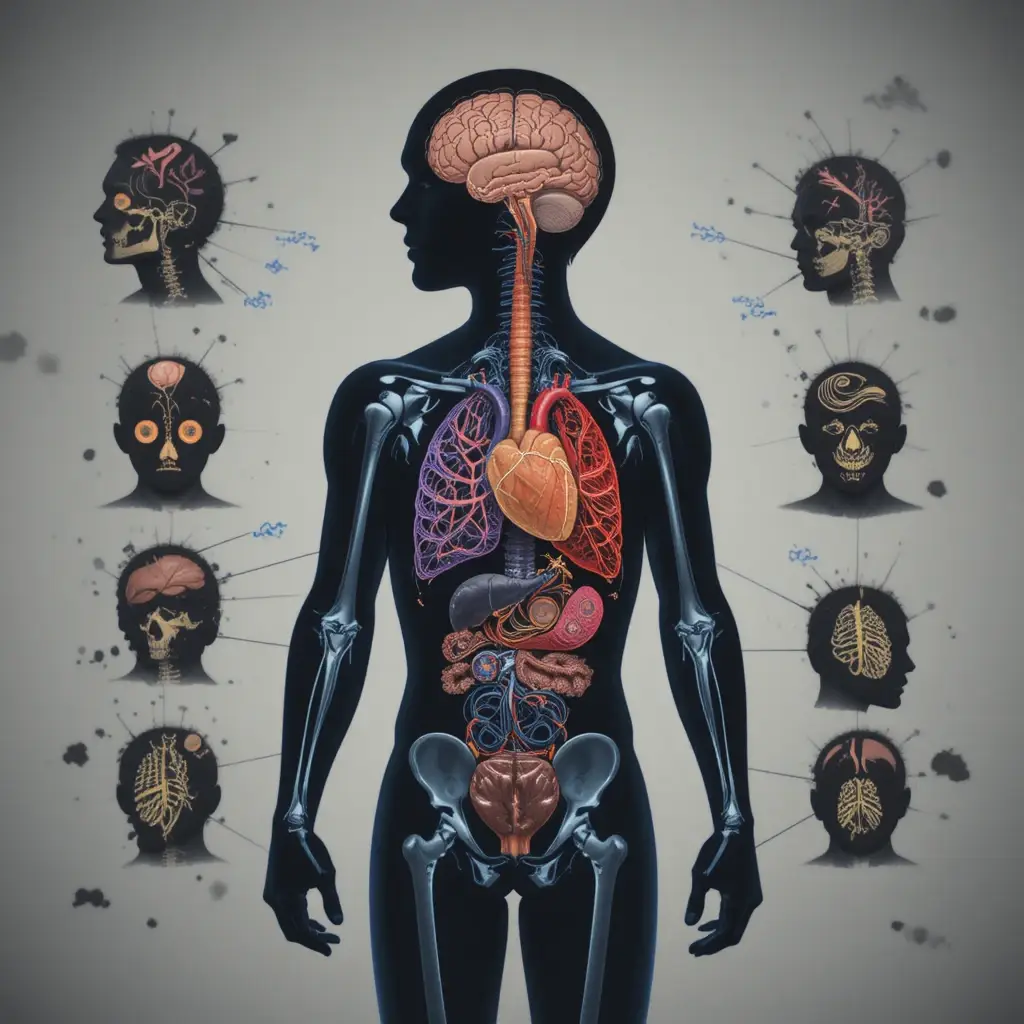
A whole-body condition with a recognisable pattern
Most individual signs of Hurler syndrome – hernias, ear infections, joint stiffness, big tummy, developmental delay – are common in children and usually have other causes. What makes Hurler syndrome distinctive is the combination of features across several systems and the way they progress over time.
Typical multisystem pattern includes:
•Coarse facial features, large head and enlarged tongue
•Hernias and an enlarged abdomen from liver and spleen involvement
•Joint stiffness, spinal curvature and short stature
•Heart valve disease and reduced exercise tolerance
•Airway obstruction, noisy breathing and sleep apnoea
•Hearing loss and frequent ENT problems
•Corneal clouding and visual issues
•Developmental delay and, without early treatment, cognitive decline
Main systems involved in Hurler syndrome
Brain & development
Skeleton & joints
Heart & circulation
Lungs & airways
Liver & abdomen
Eyes & vision
Ears & hearing
Mouth, teeth & growth
Brain and neurodevelopmental features
In severe MPS I-H, the central nervous system is affected early. Infants may initially show mild developmental delay; without effective treatment, developmental progress slows, plateaus and then regresses.
Key features:
- Gross motor delay (late sitting, crawling, walking)
- Language delay (late first words, limited vocabulary)
- Learning difficulties and, in untreated children, progressive cognitive decline
- Behavioural changes, sleep disturbance and, later, loss of previously learned skills
In transplanted children, the aim is to stabilise or preserve as much neurocognitive function as possible, but subtle learning and attention difficulties are still common.
Skeletal and joint manifestations
Skeletal disease is a hallmark of Hurler syndrome and a major contributor to long-term disability. GAG storage in cartilage and bone disrupts normal growth and joint function.
Typical skeletal/joint features:
- Short stature and disproportionate growth (short trunk, relatively short limbs)
- Thoracolumbar gibbus (prominent curve in the lower spine), kyphosis and/or scoliosis
- Hip dysplasia, genu valgum (knock knees) and other limb deformities
- Joint stiffness and contractures, especially in shoulders, elbows, hands and hips
- Carpal tunnel syndrome, causing hand pain or numbness in older children
These features often progress over time and often require repeated orthopaedic review and surgery.
Cardiac involvement
Heart disease is common in Hurler syndrome. GAG storage in valves and myocardium causes progressive structural change and functional impairment.
Key cardiac features:
- Thickened mitral and aortic valves, usually with regurgitation (leakage)
- Heart murmurs on examination
- Enlarged heart and, in some, reduced pumping function
- Reduced exercise tolerance and breathlessness compared to peers
Cardiac issues are a major reason for regular echocardiograms and careful anaesthetic planning.
Respiratory and airway problems
Upper and lower airway obstruction is a core component of the multisystem picture. Soft tissue thickening, skeletal changes and chest wall restriction all contribute.
Typical respiratory features:
- Loud snoring, noisy breathing and mouth breathing
- Obstructive sleep apnoea (pauses in breathing during sleep, restless nights, daytime sleepiness)
- Recurrent chest infections, chronic cough in some patients
- Reduced lung volumes due to chest wall deformity and scoliosis
These problems significantly increase risk around sedation and general anaesthesia, making experienced anaesthetic care essential.
Hepatosplenomegaly and abdominal signs
The liver and spleen often become enlarged early in life, contributing to the “big tummy” that many families notice.
Common abdominal features:
- Enlarged liver and spleen on examination or ultrasound
- Visible umbilical and/or inguinal hernias
- Protruding abdomen, even in otherwise slim children
Although liver function is often preserved, hepatosplenomegaly is a useful marker of overall GAG storage.
Ocular involvement
GAG storage in the cornea and other eye structures leads to characteristic changes that may progress over time.
Key eye features:
- Corneal clouding (hazy, “foggy” appearance of the cornea)
- Gradual reduction in visual clarity
- Possible retinal involvement affecting night or peripheral vision
- Risk of optic nerve involvement in some cases
Regular ophthalmology review is important, as vision changes can be subtle at first.
Hearing, ear and upper airway features
Ear, nose and throat problems are extremely common and are often among the first reasons children with Hurler syndrome see specialists.
Typical ENT/hearing features:
- Recurrent ear infections and persistent glue ear
- Conductive hearing loss, often progressing to mixed (conductive + sensorineural) loss
- Chronic nasal congestion and mouth breathing
- Enlarged tonsils/adenoids contributing to snoring and sleep apnoea
These features often prompt grommet insertion, adenotonsillectomy and hearing aid use.
Oral and dental manifestations
GAG accumulation in gums, tongue and jaw affects oral health and airway space.
Typical features:
- Macroglossia (large tongue) and thickened gums
- Crowded or irregular teeth, sometimes with delayed eruption
- Higher risk of dental decay and gum disease
- Contribution to speech difficulties and airway obstruction
Regular dental care with clinicians experienced in complex needs is strongly recommended.
Growth and hormonal aspects
Growth failure is common in Hurler syndrome, driven by skeletal involvement, chronic disease and, in some patients, endocrine factors.
Key points:
- Short stature is typical, often more obvious after the first few years of life
- Puberty may be delayed, normal, or in some cases altered; careful monitoring is important
- Nutritional challenges, recurrent illness and sleep disturbance add to growth and energy issues
Endocrine review may be needed as part of long-term follow up.
Why the multisystem pattern matters for diagnosis
The strength of the diagnostic signal in Hurler syndrome lies in joining the dots: seeing that hernias, recurrent infections, coarse features, big tummy, stiff joints, heart murmurs and developmental delay occur together rather than in isolation.
For clinicians, red-flag multisystem patterns include:
- Coarse facial features + hepatosplenomegaly + hernias
- Joint stiffness or spinal curvature + short stature + big tummy
- Recurrent ENT problems + hearing loss + sleep apnoea
- Developmental delay + any of the above somatic features
A child with this kind of multisystem involvement should be referred urgently to a metabolic disease centre to exclude MPS and related conditions.
What the multisystem nature means day to day
For families, the multisystem nature of Hurler syndrome explains why there are many different appointments and specialists involved — cardiology, respiratory, orthopaedics, ENT, ophthalmology and more.
This can feel overwhelming, but it also means that many aspects are manageable when each system is monitored and treated proactively.