Symptoms of Hurler syndrome in children and teenagers
As children with Hurler syndrome (MPS I-H) grow older, their symptoms change. Many have received haematopoietic stem cell transplantation (HSCT) and enzyme replacement therapy (ERT) in early childhood, which improves survival and neurocognitive outcomes, but does not remove all health problems. In school-age children and teenagers, the focus often shifts from diagnosis to managing residual skeletal, cardiac, respiratory, hearing, vision and learning issues, and supporting independence and quality of life.
This page describes the typical symptoms and challenges seen in children and adolescents with Hurler syndrome, especially in those who have received modern treatment.
How Hurler syndrome looks in older children and teens
In the pre-treatment era, most children with Hurler syndrome did not survive beyond the first decade. With HSCT and ERT, many now reach adolescence and adulthood. Their clinical picture is often dominated not by rapid neurodegeneration, but by chronic multisystem problems, particularly involving the skeleton, heart, lungs, ears, eyes and neurocognition.
Key themes in this age group:
•Persistent or progressive skeletal and joint problems
•Ongoing cardiac valve disease and exercise limitation
•Airway and respiratory issues, especially during sleep and anaesthesia
•Hearing and vision impairment
•Learning difficulties, fatigue and emotional challenges
•Need for ongoing surgeries and multidisciplinary follow up
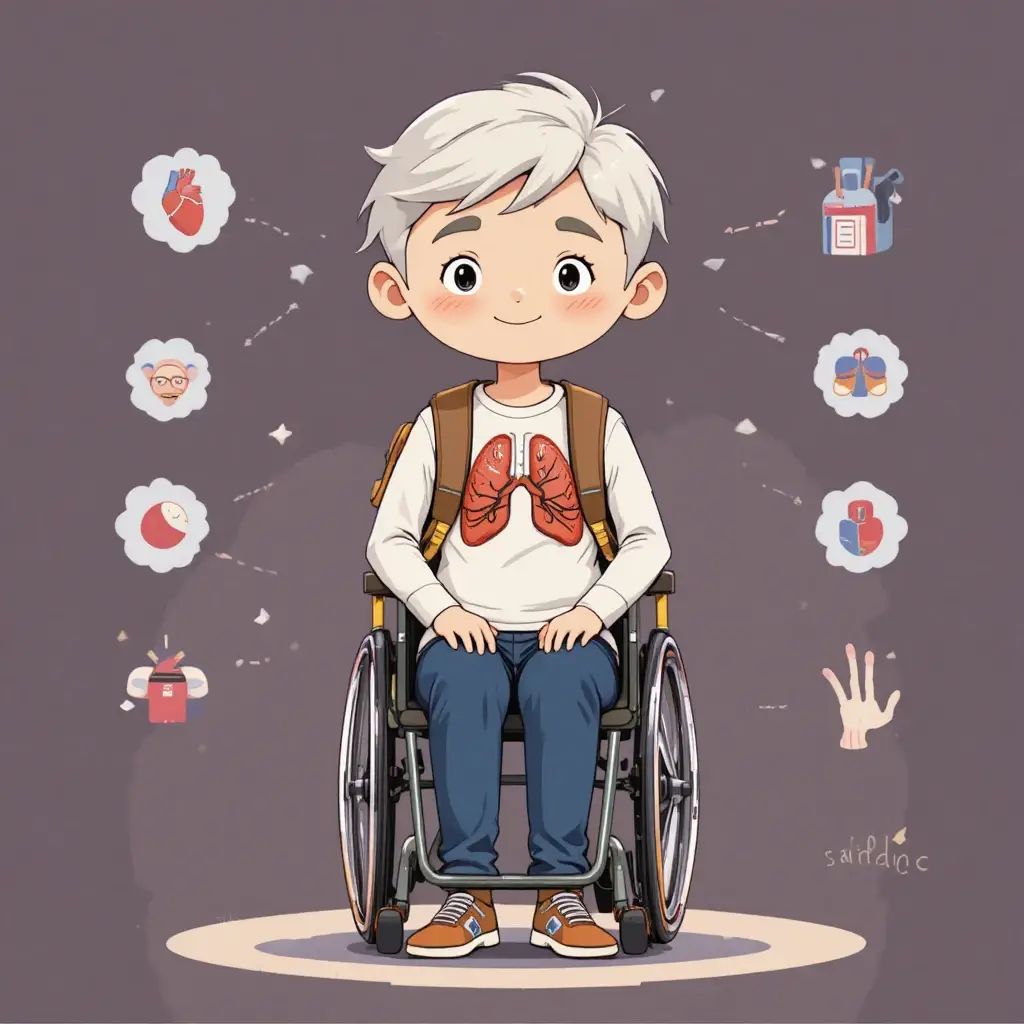
Key symptom areas in this age group
Bones & joints
Skeletal deformities, joint stiffness, short stature, and mobility challenges
Heart & circulationa
Valve disease, reduced exercise tolerance, and cardiac monitoring needs
Breathing & sleep
Sleep apnoea, airway obstruction, and respiratory complications
Hearing & communication
Hearing loss, speech challenges, and classroom support needs
Eyes & vision
Corneal clouding, reduced vision, and ongoing eye care requirements
Learning & behaviour
Neurocognitive challenges, learning support, and educational planning
Bones, joints and mobility in older children
Skeletal disease is one of the most persistent features of Hurler syndrome, even after successful HSCT. Growth plates and cartilage are difficult to completely correct, so many children and teenagers live with a combination of short stature, joint stiffness and skeletal deformities.
Common skeletal and mobility issues:
- Short stature and disproportionate growth (short trunk, relatively shorter limbs)
- Spinal deformities – kyphosis or scoliosis, sometimes requiring bracing or spinal surgery
- Hip dysplasia and risk of hip subluxation or dislocation
- Genu valgum (knock knees) and other limb alignment problems
- Joint stiffness and contractures, especially in shoulders, elbows, hands and hips
Carpal tunnel syndrome, causing hand pain, numbness or weakness
Impact on daily life:
Children may struggle with long walks, stairs, sports, dressing, handwriting and fine motor tasks. Many benefit from physiotherapy, occupational therapy, orthopaedic surgery and adaptive equipment.
Cardiac symptoms and exercise tolerance
Cardiac involvement often continues or progresses in older children and teens, even after HSCT. Glycosaminoglycan storage and secondary changes in heart valves and myocardium can lead to valve disease and reduced exercise tolerance.
Typical cardiac issues:
- Thickened, leaking heart valves, especially mitral and aortic valves
- Heart murmur on examination
- Reduced exercise capacity – getting breathless or tired more quickly than peers
In some cases, heart enlargement or reduced pumping function
What families may notice:
- Child cannot keep up with peers in physical activities
- Complaints of tiredness, chest discomfort or palpitations
Need for regular echocardiograms and, in some young people, valve repair or replacement surgery
Breathing, sleep and airway problems
Airway and respiratory symptoms remain a major issue in many older children and teenagers with Hurler syndrome. Thickened tissues, skeletal changes and residual storage in the airway can contribute to chronic obstruction and sleep-disordered breathing.
Typical features:
- Loud snoring and noisy breathing, especially at night
- Obstructive sleep apnoea – pauses in breathing, restless sleep, morning headaches, daytime sleepiness or behaviour changes
- Recurrent chest infections in some patients
Restricted lung function due to chest wall deformity and spinal curvature
Clinical implications:
- Many need periodic sleep studies (polysomnography)
- Treatments can include adenotonsillectomy, CPAP/BiPAP at night, respiratory physiotherapy and careful planning for any general anaesthetic
Hearing loss and its impact on learning
Hearing impairment is very common in older children and young people with Hurler syndrome, even after early treatment. Conductive hearing loss from middle ear disease can be followed or accompanied by sensorineural loss.
Typical hearing-related issues:
- Persistent or recurrent glue ear and middle ear infections in early childhood
- Mixed conductive and sensorineural hearing loss in older children
- Need for grommets, hearing aids or other assistive devices
- Speech that may be quiet, nasal or difficult to understand, influenced by hearing, tongue size, jaw shape and neurocognition
Impact at school:
- Difficulty hearing in noisy classrooms
- Challenges following group discussions
- Need for classroom adjustments, preferential seating, FM systems or other supports
Vision changes in children and teenagers
Eye problems can continue or evolve with age. Corneal clouding, retinal involvement and optic nerve changes may affect visual acuity and visual fields.
Common visual issues:
- Persistent or progressive corneal clouding, leading to blurred or hazy vision
- Difficulty with night vision or reduced peripheral vision if the retina is affected
Potential optic nerve involvement in some patients
Management:
- Regular ophthalmology review
- Consideration of corneal transplantation in selected cases, while recognising that retinal and brain factors also influence overall sight
- Support in school with larger print, good lighting and seating near the board
Neurocognitive profile in treated Hurler syndrome
For children transplanted early, HSCT can stabilise or slow neurocognitive decline. Many retain useful language and learning abilities, though subtle difficulties are common. For those transplanted later, or with more advanced disease at the time of treatment, intellectual disability may be more pronounced.
Typical neurocognitive and behavioural features:
- Learning difficulties, particularly in processing speed, attention and executive function
- Variability in IQ – some children function in the low-normal range, others have mild-to-severe intellectual disability
- Fatigue, which can worsen learning and concentration
- Anxiety, frustration or behaviour changes related to pain, sleep disturbance or medical procedures
School and life impact:
- Many children attend mainstream school with support; others may benefit from special education settings
- Individualised education plans (IEPs), regular neuropsychological assessments and close communication between school and medical team are important
Chronic symptoms that affect quality of life
Beyond organ-specific problems, many children and teenagers with Hurler syndrome experience:
Chronic pain
Often from joints, spine or after orthopaedic surgeries
Fatigue
Due to sleep apnoea, cardiac and respiratory burden, frequent hospital visits
Reduced stamina
Need for pacing activities throughout the day
Emotional challenges
Feeling “different”, missing school, visible physical differences
Addressing these symptoms requires a holistic approach, including pain management, sleep optimisation, psychological support and social work input.
Operations and hospital visits
Many older children and teenagers with Hurler syndrome undergo multiple surgeries by adolescence, such as:
- Hernia repairs in early childhood
- Grommet insertion and adenotonsillectomy
- Orthopaedic surgeries (hip reconstruction, spinal fusion, limb correction)
- Carpal tunnel release
- In some cases, cardiac valve surgery
Monitoring symptoms in school-age children and teens
- New or worsening back pain, limb pain or changes in walking
- Shortness of breath, reduced exercise tolerance or chest symptoms
- Changes in sleep quality, loud snoring or daytime sleepiness
- Changes in hearing or vision
- New difficulties with schoolwork, behaviour or concentration
- Impact on mood, friendships and independence
Follow-up priorities for clinicians
- Regular review of growth, puberty and nutrition
- Scheduled cardiology follow-up (echo and clinical review)
- Ongoing respiratory and sleep assessment
- Orthopaedic surveillance for spinal and limb alignment
- ENT, audiology and ophthalmology reviews
- Neuropsychological assessment and education liaison
- Pain, fatigue and mental health assessment
Key points about symptoms in children and teenagers
- With HSCT and ERT, many children with Hurler syndrome now reach adolescence, but often with persistent multisystem disease.
- The most prominent issues in this age group are usually skeletal, cardiac, respiratory, hearing, vision and learning difficulties, rather than rapidly progressive neurodegeneration.
- Regular multidisciplinary follow-up and timely surgeries can improve function and comfort, but may not fully normalise health.
- School-age years bring new challenges in education, social participation and emotional wellbeing, which require as much attention as medical issues.
- Families and clinicians should work together to monitor change, plan ahead and support the young person's independence and quality of life.